

From 1 December 2025, Victoria will introduce the Occupational Health and Safety (Psychological Health) Regulations 2025. These regulations represent a major shift in how psychological health is viewed and managed in the workplace, placing it on equal footing with physical safety.
While Victoria has not adopted the national model Work Health and Safety laws, the new approach remains broadly aligned with national expectations. The regulations set clear requirements for how employers must identify, assess, and control psychosocial hazards. Further details are available on the WorkSafe Victoria website:
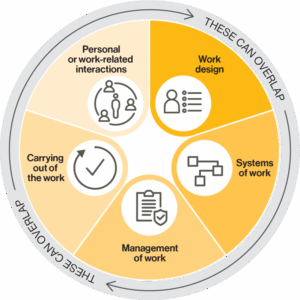 What are psychosocial hazards?
Psychosocial hazards are factors in the design, management or culture of work that can lead to psychological or physical harm. Under Victoria’s Psychological Regulations, the definition differs slightly from other states and covers any element of work design, systems of work, work management, the way tasks are carried out or the personal and work-related interactions employees experience.
Examples include excessive workloads, low job control, unclear expectations, poor change management, role conflict, workplace conflict, bullying, exposure to traumatic events and inadequate support from leaders or colleagues.
What employers need to do
The new regulations require employers to take a proactive, structured approach to managing psychological health. This includes:
- Identify psychosocial hazards in the workplace.
- Assess risks to health and safety.
- Control those risks; first by eliminating them where practicable, or otherwise by reducing them through work design, systems, or management approaches.
- Monitor and review controls regularly to ensure they remain effective.
- Consult with employees and Health and Safety Representatives (HSRs) throughout the process.
These steps align with existing OHS principles, but the expectations around psychological risk are now clearer and more prescriptive.
Control measures: training alone is not enough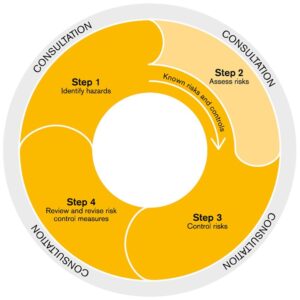
A key message in the regulations is that education or awareness activities, on their own, do not satisfy compliance obligations unless there are no other reasonably practicable options.
Effective control measures may include:
- Redesigning work to provide clarity and balanced workloads
- Adjusting systems of work
- Improving team structures, supervision, or resource allocation
- Providing appropriate training as part of a broader risk management approach
Employers are expected to address psychosocial risks through meaningful and systemic actions. The emphasis is on how work is organised, managed, and supported on a daily basis rather than on one-off or symbolic initiatives.
How organisations can prepare
To support compliance ahead of the December 2025 commencement date, organisations should:
Review the new regulations in detail. WorkSafe Victoria’s Compliance Code for Psychological Health is a useful graphical reference: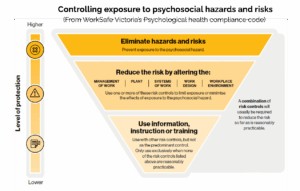
- Compare current risk management practices with the new requirements.
- Update consultation processes so HSRs and staff are actively engaged in identifying and managing risks.
- Provide education for managers and leaders on psychosocial risk, warning signs, and their responsibilities.
- Ensure employees have safe, confidential channels to raise concerns.
- Monitor indicators such as turnover, absenteeism, employee feedback, and workload patterns to help identify risks early.
Supporting psychological health is now a core part of employer obligations in Victoria. For many businesses, this is also an opportunity to strengthen workplace culture, improve engagement, and support long-term organisational performance. For further information, please refer to some of the resources below:
• Psychological health | WorkSafe Victoria
• Compliance code: Psychological health | WorkSafe Victoria
• Compliance code: Psychological health – Appendix B – Identifying psychosocial hazards | WorkSafe Victoria
• Protecting The Mental Health Of Workers In Victoria | Premier
Related Posts
The Hidden Cost of Delaying Retirement Planning
Time in the Market vs Timing the Market is what Counts We often speak with clients, and one thing that

Understanding Victoria’s Vacant Residential Land Tax: Key Updates and Implications
The Victorian Government has recently updated their Vacant Residential Land Tax (VRLT) legislation to now include undeveloped land in Metropolitan